
Got an old fridge sitting around? Maybe it came with the house. Maybe it’s been sitting in the garage after giving up. Either way, it’s just taking up space and you want it gone.
Seems simple drag it out, call someone, or dump it.
But it’s not that straightforward.
Getting rid of a fridge is nothing like tossing out a busted chair. There’s refrigerant, compressors, heavy metals and a bunch of rules that catch people off guard. At Kinsley Junk Removal, we’ve seen homeowners make mistakes that cost them fines or worse, create risks for their family and the environment.
Before you move it, it’s worth knowing what’s involved and how to get rid of it properly without any hassle.
Key Takeaways
- Those old fridges? They’re full of stuff you don’t want leaking out; refrigerant, oil, foam. Has to be handled right.
- Dump it somewhere you’re not supposed to, and you could be looking at a fine. Most towns have rules about this stuff.
- It is not just harmless to leave an old fridge around. It may roll over, trap a child or begin seeping foul chemicals.
- Properly recycle it and you are receiving steel, copper and other materials back. Fridge is reused up to 95%.
- The thing is that a bit of planning can go a long way. Be informed of your alternatives-curbside pickup, having them take it back in store or having come certified people.
What Is Really in That Fridge
It is simply a metal box on the exterior. But inside? There is much more to it all.
Refrigerant. It is the stuff which makes it cold. Your older fridge will most likely contain CFCs or HCFCs the stuff that shreds the ozone layer. Newer ones are powered with HFCs which are strong greenhouse gases. In any case, when that stuff escapes into the air, it will be a problem.
Compressor oil. Within the compressor, oil is combined with the refrigerant. It is likely to accumulate contaminants over the years hence it must be emptied and properly managed. Can’t just dump it.
Insulation foam. Inside the walls and doors, the foam contains blowing agents that are also harmful. If the fridge gets crushed or shredded without special handling, those gases get released.
Heavy metals and other nasties. Capacitors might have PCBs. Wiring can contain lead. Even the paint on old ones might have lead. You don’t want that stuff leaching into the ground.
Because of all this, you can’t just toss a fridge in the landfill. Most dumps won’t take them unless they’ve been processed right.
Why “Just Putting It on the Curb” Usually Backfires
Some garbage services take bulky items. But they almost always have rules for appliances. You might need to schedule a special pickup, empty it out, remove the doors, or show proof the refrigerant’s been removed.
If you just roll it to the curb without checking, you could end up with a ticket. Or the truck drives right past, and now you’ve got a fridge sitting there for weeks.
The Danger of Letting an Old Fridge Hang Around
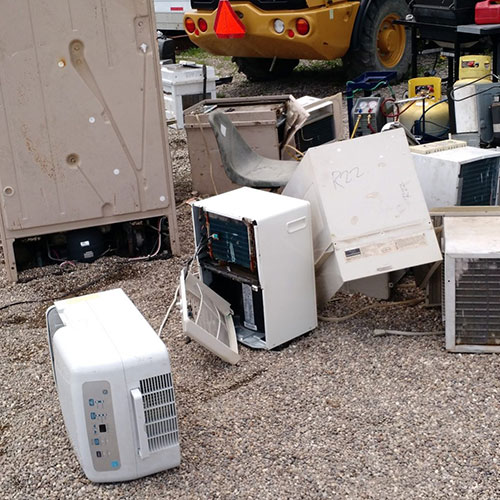
Maybe you figure you’ll store it in the garage until you decide what to do. That’s common. But an old fridge sitting around can actually create real hazards.
Fire and environmental risks. Old appliances—especially ones with faulty wiring, dust buildup, or a tired compressor—can become a fire or environmental hazard. We’ve seen garage fires start from a fridge that shorted out after years of neglect. And if it starts leaking refrigerant or oil, you’ve got harmful chemicals spreading through your home.
Health and safety risks. An old fridge with doors still on can trap a kid playing hide‑and‑seek. It’s rare, but it happens. Even just the weight of a tipped fridge can hurt someone.
Plus, once it sits there, clutter starts piling up around it. Boxes, tools, junk. That clutter itself becomes a tripping hazard, a place for pests, a safety problem. We talk about that in our guide on when does household clutter become a health or safety risk?
So the faster you deal with that old fridge, the safer your home stays.
How to Get Rid of a Fridge the Right Way
You’ve got some solid options
Retailer Take‑Back
When you buy a new fridge, most appliance stores will haul the old one away. It’s often included in the delivery fee. They’re required to handle it right, so this is one of the easiest routes.
Municipal Programs
Some cities offer appliance recycling. You might get a free curbside pickup if you schedule it. Others have designated drop‑off days. Check your local waste website.
Certified Recyclers
Find a recycling facility that’s certified to handle refrigerants and hazardous materials. They’ll recover the refrigerants, drain the oils, and recycle the steel and copper. Some even pay a little for the scrap.
Utility Company Programs
Some power companies offer rebates or free pickup for old, inefficient fridges. They’ll come get it, recycle it, and sometimes mail you a check. Worth a call.
What to Avoid
- Don’t hire a random scrap guy who just chops it up for copper. Many vent refrigerants illegally.
- Don’t dump it illegally. Fines are way more than proper disposal costs.
- Don’t let it sit. Every day it stays, risks go up.
What Happens When a Fridge Gets Recycled Properly

It’s actually a pretty cool process
- Refrigerant gets sucked out with special machines. It’s either destroyed or cleaned up for reuse.
- Compressor and oil are drained and treated.
- Doors come off (sometimes door seals get recycled separately).
- The fridge goes through a shredder in a controlled environment. The insulation foam is captured so the blowing agents don’t escape
- Metals get separated; steel goes to mills, copper and aluminum get refined.
- Plastics get sorted and recycled when possible.
Up to 95% of a fridge can be recycled. That’s a ton of material that doesn’t end up in a landfill.
What to Do If You Have an Old Fridge Right Now
If you’ve got one sitting around, here’s a quick plan.
- Empty it. Take out all food, shelves, drawers.
- Leave the doors on unless your local program says otherwise. If you’re storing it temporarily, take the doors off or strap them so they can’t latch.
- Call your local waste department. Ask about appliance disposal. Or check with your utility.
- Schedule a pickup or drop‑off. If you’re buying a new one, arrange for them to take the old one.
- Don’t put it off. Every day it sits is a day of risk and clutter.
FAQs
Mate, no. That stuff is packed in there under pressure. You cut it, it’s gonna spray everywhere and it’s cold enough to burn your skin. Plus, you’re not supposed to let it out into the air. It’s against the rules. Leave it for someone who’s got the machine to suck it out proper
Most dumps won’t even take it unless you can show them it’s been emptied of all the gas and oil. They don’t want that stuff leaking in their piles. They’ll either send you away or make you jump through hoops.
Depends. Sometimes the power company will pick it up for free. Some appliance shops will take the old one when they deliver the new one no extra charge. If you go to a recycler, maybe twenty, fifty bucks. Still less than a ticket if you dump it somewhere you shouldn’t.
You can, but I wouldn’t leave it long. If you do, take the doors off or tie them open. Kids get curious. Also, unplug it no point leaving it powered. And don’t let junk pile up around it. But really, the sooner it’s out of there, the less you have to worry about.
Believe it or not, dust builds up inside. Old wiring can short out. Compressors can still have stored charge. And if you’ve got boxes or old rags leaning against it, that’s just fuel waiting for a spark.
Ask him if he’s got the license to handle refrigerant appliances. A lot of scrap guys don’t. They’ll just cut the copper and vent the gas. That’s illegal, and if they get caught, it can come back on you. Use someone who does it by the book.
Check with your local waste authority or the environmental agency. They usually keep a list of certified recyclers. Or call a couple of appliance shops and ask who they use.
Wrapping it up
Look, it’s easy to think an old fridge is just junk. But it’s got stuff inside that can hurt the environment, and it can be a real hazard sitting around. So don’t just shove it in the corner. Spend a few minutes to find the right way to get rid of it. You’ll clear up the space, sleep better knowing it’s not a risk, and you won’t be that neighbour who dumped it in the bush somewhere